
Blogs
Blogs
The Hidden Math That Makes Paid Ads the Most Expensive Way to Close B2B Deals
I've spent 20+ years watching B2B companies pour money into paid advertising while convincing themselves they're making smart investments.
The numbers tell a different story.
When you track a lead from first click to closed deal, the actual cost is embarrassing. And most marketing teams never do the full calculation.
Let me show you what I mean.
The Advertised Cost Is a Lie
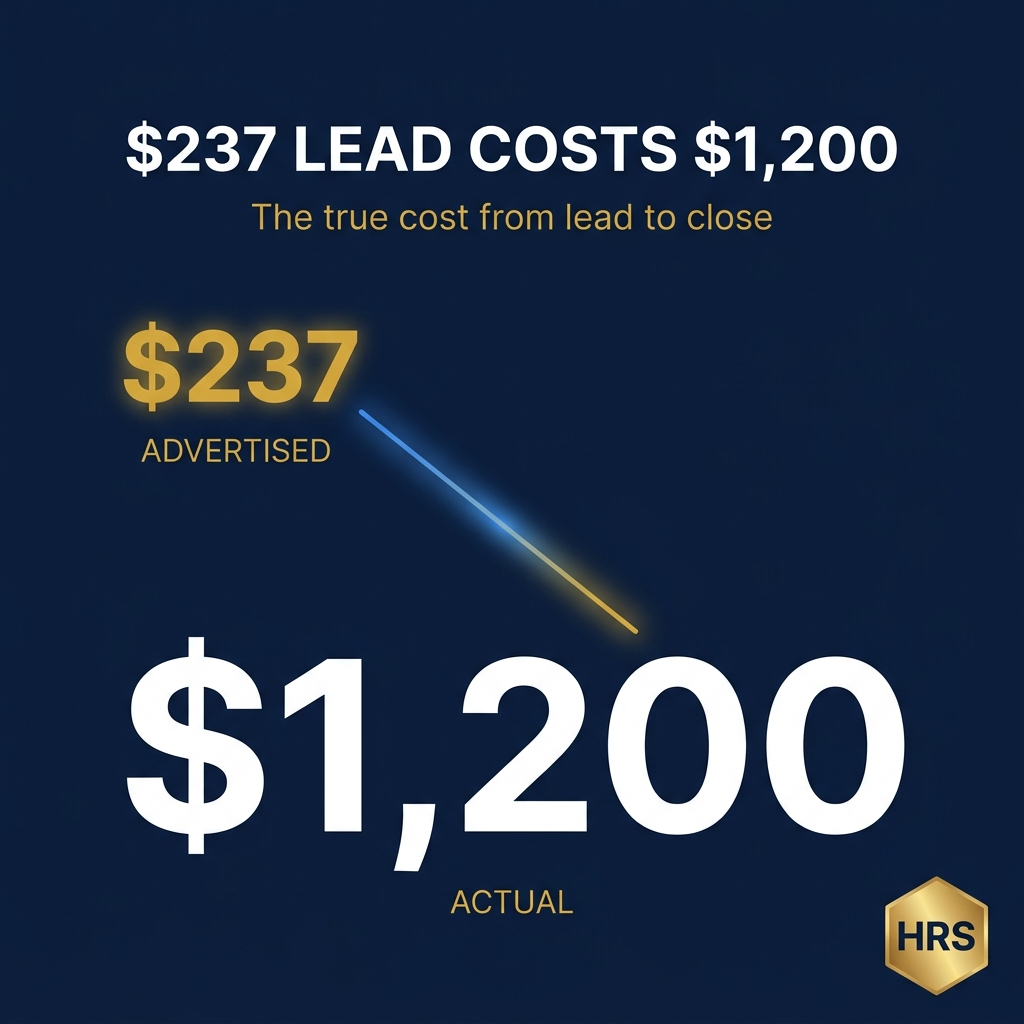
Your ad platform dashboard shows you paid $237 per lead. That feels manageable.
But that number is fiction.
Here's what actually happens: That raw lead enters your nurture sequence. Your marketing automation platform sends 6-8 emails over three weeks. Your SDR team finally gets the lead qualified. They book a meeting. Your sales team takes the call. Then come the follow-ups, the proposals, the negotiations.
That $237 lead just cost you $700-$1,200 by the time it's sales-qualified.
The data backs this up. Research shows a raw lead can easily cost 3-5x the initial CPL by the time it reaches your sales team. The industry calls this "phantom denominator inflation." I call it what it is: hidden costs that destroy your ROI.
And we're just getting started with the math.
The SDR Multiplier Nobody Talks About
Your in-house SDR costs you $11,500 per month when you factor in salary, benefits, tools, data, management, and enablement.
If they're good, they'll book 10-14 meetings per month.
Do the math: You're paying $821-$1,150 per meeting.
That's according to industry benchmarks tracking fully loaded SDR costs. Most companies don't calculate this because it would force them to confront reality.
Your SDR dials 50-80 times daily. They connect with 5-8% of prospects. Of those conversations, 10-15% convert to meetings. The efficiency is terrible, but you've accepted it as normal.
Meanwhile, customer acquisition costs have increased 60% over the past five years. You're paying more to reach fewer qualified buyers.
The companies successfully fighting this trend share two characteristics: integrated technology stacks and data-driven decision making.
Translation: They stopped guessing and started measuring the full cost.
The Conversion Rate Gap
Here's where the traditional approach falls apart completely.
Your paid ads generate leads at a 2-5% conversion rate if you're lucky. You need volume to make the funnel work, which means more ad spend, more SDR time, more everything.
Direct messaging on LinkedIn? The average reply rate is 85%.
That's not a typo. LinkedIn research confirms this is 3x higher than traditional email response rates. When agencies run ultra-personalized LinkedIn outreach campaigns, they see a 48.14% positive reply ratio.
These aren't casual responses. These are meeting requests and qualified sales inquiries.
LinkedIn Conversation Ads deliver 50-60% open rates and 2-5% click-through rates. Top-performing campaigns hit 8-10% CTR. Your display ads struggle to break 0.5%.
The engagement gap is massive.
Audiences on LinkedIn are 6x more likely to convert compared to other platforms. The data from multiple studies shows exposure on LinkedIn is associated with as much as a 50% increase in down-funnel conversion rates across all channels.
You're paying premium prices for inferior results.
Real Numbers From Real Campaigns
A marketing team ran two tests:
Test A: Generated 100 leads at $4.50 CPL with 5% conversion. Total revenue: $13,500.
Test B: Generated 15 leads at $30 CPL with 40% conversion. Total revenue: $32,000.
The "expensive" leads produced 2.4x more revenue despite costing 6.7x more per lead.
Another team tracked 11 campaigns from lead to closed-won revenue. Three campaigns drove 72% of deals. They killed six underperformers. MQLs dropped 40%, but cost per qualified meeting fell from $380 to $150. Pipeline value climbed 40%.
Fewer leads. More money.
This is what happens when you optimize for quality over volume. The traditional funnel logic breaks down when conversion rates are this different.
The Path Nobody Wants to Admit Works Better
One direct message. One conversation. One close.
I've watched this happen repeatedly with the right approach. No nurture sequence. No SDR handoff. No multi-touch attribution complexity.
LinkedIn generates 80% of all B2B leads from social media and delivers 277% better results than Facebook or Twitter. Yet only 10% of marketers invest in LinkedIn outreach.
The opportunity gap is massive.
Companies actively tracking and refining their LinkedIn outreach achieve a 65% higher conversion rate than those who don't. Using structured message sequences improves lead conversion rates by 15% compared to single messages.
Multi-channel prospecting that blends outbound targeting with inbound efficiency averages $188 per lead. That's the sweet spot.
Compare that to LinkedIn Ads, which vary wildly by region: North America averages $230 per lead while APAC averages $80. The cost inconsistency alone should make you question the model.
Why This Matters for Digital Agencies
I built HRS specifically to solve this problem for digital agencies and lead generation businesses.
You're stuck between two bad options: Keep buying expensive ads for your clients, or build complex outbound systems that require massive overhead.
The agencies winning right now are the ones who can offer clients direct messaging automation on LinkedIn, email, and voice without the infrastructure burden.
We provide approved partners with a free white label platform so they can become revenue positive quickly. Full training, ongoing support, and service while they grow.
Why? Because the math is simple when you can deliver better results at lower costs. Your clients stay longer. Your revenue grows. You're not trapped in the paid ad hamster wheel.
The Uncomfortable Truth
The advertising industry has convinced B2B companies that complex funnels and high customer acquisition costs are normal.
They're not.
When you calculate the full cost from ad click to closed deal, including nurture sequences, SDR time, sales calls, and follow-ups, the numbers are brutal.
Meanwhile, direct messaging delivers higher engagement, better conversion rates, and shorter sales cycles.
The data is clear. The math is embarrassing for the ad industry.
The question is whether you're willing to challenge the conventional approach and optimize for what actually works.
Because in 2026, customer acquisition costs are only going up. The companies that figure out efficient direct outreach will win. The ones clinging to traditional paid advertising will keep wondering why their margins keep shrinking.
You decide which side you want to be on.

Luke
Luke
The Hidden Math That Makes Paid Ads the Most Expensive Way to Close B2B Deals
I've spent 20+ years watching B2B companies pour money into paid advertising while convincing themselves they're making smart investments.
The numbers tell a different story.
When you track a lead from first click to closed deal, the actual cost is embarrassing. And most marketing teams never do the full calculation.
Let me show you what I mean.
The Advertised Cost Is a Lie
Your ad platform dashboard shows you paid $237 per lead. That feels manageable.
But that number is fiction.
Here's what actually happens: That raw lead enters your nurture sequence. Your marketing automation platform sends 6-8 emails over three weeks. Your SDR team finally gets the lead qualified. They book a meeting. Your sales team takes the call. Then come the follow-ups, the proposals, the negotiations.
That $237 lead just cost you $700-$1,200 by the time it's sales-qualified.
The data backs this up. Research shows a raw lead can easily cost 3-5x the initial CPL by the time it reaches your sales team. The industry calls this "phantom denominator inflation." I call it what it is: hidden costs that destroy your ROI.
And we're just getting started with the math.
The SDR Multiplier Nobody Talks About
Your in-house SDR costs you $11,500 per month when you factor in salary, benefits, tools, data, management, and enablement.
If they're good, they'll book 10-14 meetings per month.
Do the math: You're paying $821-$1,150 per meeting.
That's according to industry benchmarks tracking fully loaded SDR costs. Most companies don't calculate this because it would force them to confront reality.
Your SDR dials 50-80 times daily. They connect with 5-8% of prospects. Of those conversations, 10-15% convert to meetings. The efficiency is terrible, but you've accepted it as normal.
Meanwhile, customer acquisition costs have increased 60% over the past five years. You're paying more to reach fewer qualified buyers.
The companies successfully fighting this trend share two characteristics: integrated technology stacks and data-driven decision making.
Translation: They stopped guessing and started measuring the full cost.
The Conversion Rate Gap
Here's where the traditional approach falls apart completely.
Your paid ads generate leads at a 2-5% conversion rate if you're lucky. You need volume to make the funnel work, which means more ad spend, more SDR time, more everything.
Direct messaging on LinkedIn? The average reply rate is 85%.
That's not a typo. LinkedIn research confirms this is 3x higher than traditional email response rates. When agencies run ultra-personalized LinkedIn outreach campaigns, they see a 48.14% positive reply ratio.
These aren't casual responses. These are meeting requests and qualified sales inquiries.
LinkedIn Conversation Ads deliver 50-60% open rates and 2-5% click-through rates. Top-performing campaigns hit 8-10% CTR. Your display ads struggle to break 0.5%.
The engagement gap is massive.
Audiences on LinkedIn are 6x more likely to convert compared to other platforms. The data from multiple studies shows exposure on LinkedIn is associated with as much as a 50% increase in down-funnel conversion rates across all channels.
You're paying premium prices for inferior results.
Real Numbers From Real Campaigns
A marketing team ran two tests:
Test A: Generated 100 leads at $4.50 CPL with 5% conversion. Total revenue: $13,500.
Test B: Generated 15 leads at $30 CPL with 40% conversion. Total revenue: $32,000.
The "expensive" leads produced 2.4x more revenue despite costing 6.7x more per lead.
Another team tracked 11 campaigns from lead to closed-won revenue. Three campaigns drove 72% of deals. They killed six underperformers. MQLs dropped 40%, but cost per qualified meeting fell from $380 to $150. Pipeline value climbed 40%.
Fewer leads. More money.
This is what happens when you optimize for quality over volume. The traditional funnel logic breaks down when conversion rates are this different.
The Path Nobody Wants to Admit Works Better
One direct message. One conversation. One close.
I've watched this happen repeatedly with the right approach. No nurture sequence. No SDR handoff. No multi-touch attribution complexity.
LinkedIn generates 80% of all B2B leads from social media and delivers 277% better results than Facebook or Twitter. Yet only 10% of marketers invest in LinkedIn outreach.
The opportunity gap is massive.
Companies actively tracking and refining their LinkedIn outreach achieve a 65% higher conversion rate than those who don't. Using structured message sequences improves lead conversion rates by 15% compared to single messages.
Multi-channel prospecting that blends outbound targeting with inbound efficiency averages $188 per lead. That's the sweet spot.
Compare that to LinkedIn Ads, which vary wildly by region: North America averages $230 per lead while APAC averages $80. The cost inconsistency alone should make you question the model.
Why This Matters for Digital Agencies
I built HRS specifically to solve this problem for digital agencies and lead generation businesses.
You're stuck between two bad options: Keep buying expensive ads for your clients, or build complex outbound systems that require massive overhead.
The agencies winning right now are the ones who can offer clients direct messaging automation on LinkedIn, email, and voice without the infrastructure burden.
We provide approved partners with a free white label platform so they can become revenue positive quickly. Full training, ongoing support, and service while they grow.
Why? Because the math is simple when you can deliver better results at lower costs. Your clients stay longer. Your revenue grows. You're not trapped in the paid ad hamster wheel.
The Uncomfortable Truth
The advertising industry has convinced B2B companies that complex funnels and high customer acquisition costs are normal.
They're not.
When you calculate the full cost from ad click to closed deal, including nurture sequences, SDR time, sales calls, and follow-ups, the numbers are brutal.
Meanwhile, direct messaging delivers higher engagement, better conversion rates, and shorter sales cycles.
The data is clear. The math is embarrassing for the ad industry.
The question is whether you're willing to challenge the conventional approach and optimize for what actually works.
Because in 2026, customer acquisition costs are only going up. The companies that figure out efficient direct outreach will win. The ones clinging to traditional paid advertising will keep wondering why their margins keep shrinking.
You decide which side you want to be on.
Luke
Luke


