
Blogs
Blogs
How to Connect with Decision-Makers on LinkedIn, Twitter, and Email Without Spending a Dollar on Ads
We've worked with hundreds of digital agencies and lead generation businesses over the past two decades. The question we hear most often isn't about technology or automation.
It's simpler than that.
"How do we actually reach decision-makers without burning through our budget on ads?"
The answer surprises people. You don't need a massive ad budget to connect with C-suite executives, VPs, and directors. You need strategy, consistency, and a systematic approach across three platforms: LinkedIn, Twitter, and email.
Here's exactly how we do it, step by step.
Why LinkedIn, Twitter, and Email Work Better Together
Here's what most people get wrong about B2B outreach. They treat each platform as a separate campaign.
That's not how decision-makers experience your brand.
They see your comment on their LinkedIn post. They notice your reply on Twitter. They receive your email. When these touchpoints align, you're not cold anymore. You're familiar.
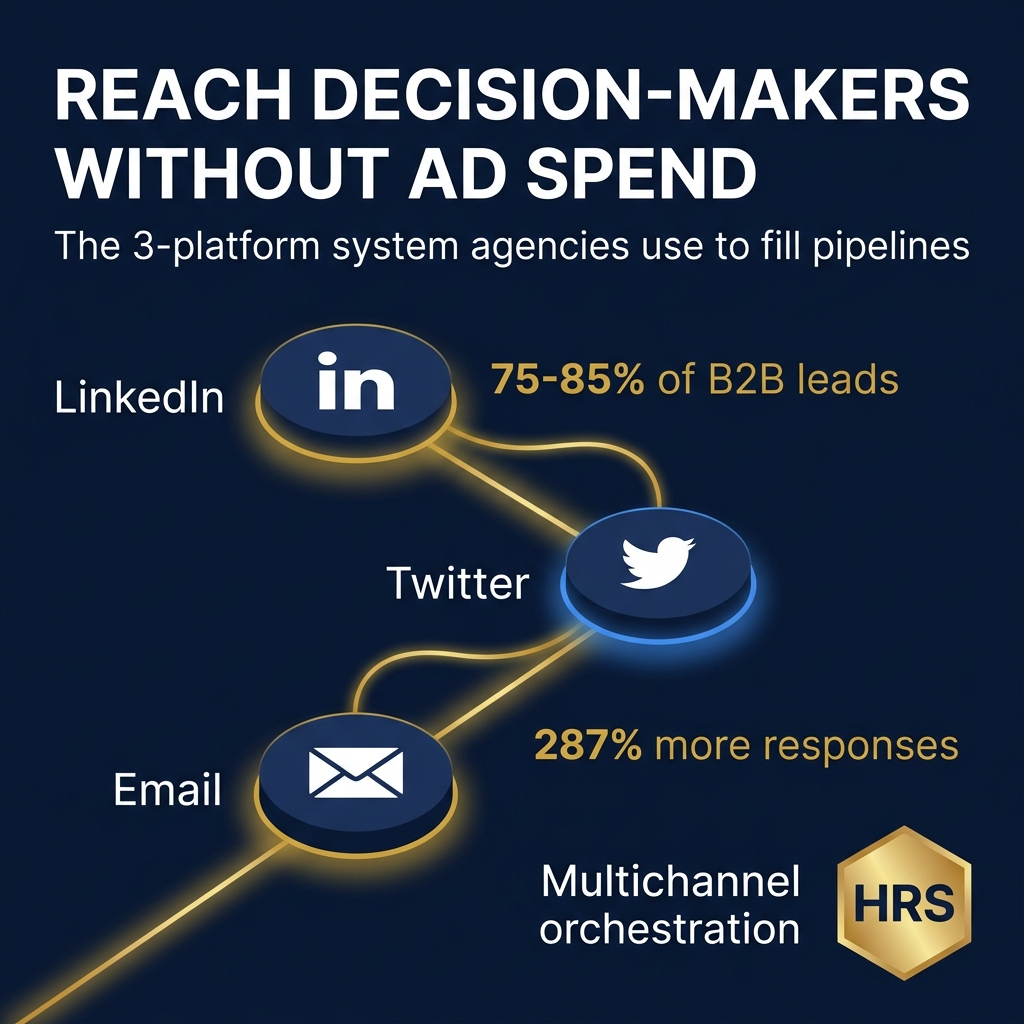
The data backs this up. Multichannel outreach delivers 287% more responses than single-channel approaches. But only when you orchestrate the sequence strategically.
Let's break down how to identify, connect with, and start conversations with decision-makers on each platform.
Step 1: Identify the Right Decision-Makers
You can't connect with everyone. You need to focus on people who actually make buying decisions.
Here's how we identify them:
On LinkedIn
Use LinkedIn's search filters strategically. Filter by job title, industry, company size, and location. Look for titles like VP, Director, Head of, or C-suite positions.
LinkedIn gives you access to 65 million decision-makers without requiring ad spend. That's 65 million people with actual budget authority.
Check their activity level. Click on their profile. Scroll through their posts and comments. Active users respond more frequently than dormant profiles.
Review their content. What are they posting about? What challenges are they discussing? This tells you what matters to them right now.
On Twitter
Search by bio keywords. Use Twitter's advanced search to find people who mention their role, industry, or company in their bio.
Follow industry hashtags. Track conversations around topics relevant to your offering. See who's leading those discussions.
Check engagement patterns. Look at who's actively replying, retweeting, and sharing insights. These people are more likely to notice and respond to you.
For Email
Build your list from LinkedIn and Twitter first. Don't buy email lists. Find decision-makers on social platforms, then locate their email addresses.
Use tools like Hunter.io or RocketReach. These services help you find verified email addresses based on names and companies.
Verify before sending. Use email verification tools to avoid bounces. High bounce rates damage your sender reputation.
Step 2: Build Recognition Before You Reach Out
This is the step most people skip. They find a decision-maker and immediately send a connection request or cold email.
That's why they get ignored.
Here's what works: Building recognition before outreach improves response rates by 3x.
Recognition means they've seen your name before. They recognize you as someone who adds value, not just another person asking for something.
On LinkedIn
Engage with their content first. Spend two weeks commenting on their posts. Not generic "Great post!" comments. Add insights, ask thoughtful questions, or share relevant experiences.
Over 70% of B2B buyers consume content and read comments before accepting connection requests. Your comments are your introduction.
Post valuable content yourself. Share insights related to their industry challenges. When they see your name in comments and in their feed, you become familiar.
Don't pitch in comments. Your goal is visibility and credibility, not immediate sales.
On Twitter
Reply to their tweets. Add value to conversations they're already having. Share a relevant article, offer a different perspective, or validate their point with your experience.
Retweet with commentary. Don't just retweet. Add your take on what they shared. This puts you on their radar as someone who engages thoughtfully.
Create content they'd care about. Tweet about topics relevant to their role. Use the same hashtags they follow. When they see you consistently, you're no longer a stranger.
For Email
Warm up your domain first. If you're sending cold emails from a new domain, start slowly. Send a few emails per day and gradually increase volume over two weeks.
Reference your LinkedIn or Twitter interaction. When you finally send that email, mention where you've engaged with their content. "I noticed your post about [topic] on LinkedIn" immediately establishes context.
Step 3: Connect Without Being Pushy
You've built recognition. Now it's time to connect.
On LinkedIn
Personalize your connection request. LinkedIn allows 300 characters. Use them. Reference something specific from their profile or recent post.
Personalized requests achieve 9.36% reply rates compared to 5.44% for blank requests. That's nearly double.
Here's a template we use:
"Hi [Name], I've been following your posts on [topic] and really appreciated your perspective on [specific point]. I work with digital agencies on [relevant area] and thought it would be valuable to connect."
Don't pitch immediately after connecting. Thank them for connecting. Continue engaging with their content. Build the relationship before asking for anything.
On Twitter
Follow them first. Engage with a few tweets over several days. Then send a direct message if appropriate.
Keep DMs conversational. Twitter is less formal than LinkedIn. Your message should feel like a natural continuation of your public interactions.
Example: "Hey [Name], loved your thread on [topic]. We're helping agencies solve similar challenges with [brief description]. Would be interested to hear more about your experience with this."
Via Email
Reference your social interactions. Start with context. Remind them where they've seen you before.
Keep it short. Decision-makers receive dozens of emails daily. Get to the point in three to four sentences.
Make it about them, not you. Don't lead with your product features. Lead with their challenge and how you might help.
Here's a structure that works:
Subject: Quick question about [specific challenge]
Hi [Name],
I've been following your insights on LinkedIn about [topic] and noticed you're dealing with [specific challenge].
We work with digital agencies on [relevant solution], and I thought you might find [specific resource or insight] helpful.
Would you be open to a quick conversation about how we've helped similar agencies tackle this?
[Your name]
Advanced personalization like this achieves reply rates up to 18%, double the average of generic templates.
Step 4: Start Conversations That Actually Go Somewhere
You've connected. Now what?
This is where most outreach dies. People get the connection, then immediately pitch their product.
Here's what works better:
On LinkedIn
Send a thank-you message. Keep it simple. "Thanks for connecting, [Name]. Looking forward to staying in touch."
Wait a few days, then provide value. Share an article, case study, or insight relevant to their recent posts. No ask attached. Just value.
When you do pitch, make it conversational. "I've been thinking about the challenge you mentioned in your post about [topic]. We've helped a few agencies solve this by [brief description]. Would it make sense to explore if this could work for you?"
On Twitter
Continue the public conversation. Reply to their tweets regularly. Build rapport in public before moving to DMs.
When you DM, reference your public interactions. "Hey, following up on our conversation about [topic]. I have some thoughts that might be useful. Mind if I share?"
Via Email
Follow up strategically. Most people quit after one email. But follow-up emails generate 42% of all replies.
Here's a follow-up sequence we use:
Email 1: Initial outreach with value proposition
Email 2 (3 days later): Share a relevant resource or case study
Email 3 (5 days later): Ask a specific question related to their challenges
Email 4 (7 days later): Final check-in with a clear call to action
Personalize every follow-up. Don't just bump the thread. Add new information, insights, or questions each time.
Step 5: Combine All Three Platforms for Maximum Impact
Here's where strategy really pays off.
You're not running three separate campaigns. You're orchestrating touchpoints across platforms to create familiarity and trust.
Here's a sequence we use:
Week 1: Engage with their LinkedIn posts and Twitter content. No outreach yet. Just visibility.
Week 2: Continue engagement. Send a LinkedIn connection request with personalized note.
Week 3: If they accept, thank them on LinkedIn. Continue engaging on Twitter. Don't pitch yet.
Week 4: Send your first value-focused email. Reference your LinkedIn connection and Twitter interactions.
Week 5: Follow up via email with additional value. Continue LinkedIn and Twitter engagement.
Week 6: Send final email follow-up. If no response, continue low-key engagement on social platforms.
This approach works because you're building recognition across multiple touchpoints. When they finally receive your email, you're not a stranger.
Companies that warm up leads on LinkedIn first see 43% of those prospects engage via cold email. LinkedIn makes email feel less cold.
What to Do When They Respond
You've done the work. They replied. Now what?
Respond quickly. Within 24 hours if possible. Decision-makers move fast. Your slow response signals low priority.
Keep the conversation focused on them. Ask about their specific challenges, timeline, and goals before pitching your solution.
Provide immediate value. Share a relevant case study, introduce them to a helpful contact, or offer a quick win they can implement right away.
Move to a call when appropriate. Email and DMs are great for initial contact, but real conversations happen on calls. Suggest a specific time and make scheduling easy.
Common Mistakes to Avoid
We've seen these mistakes kill otherwise solid outreach efforts:
Pitching too early. Build recognition first. Earn the right to pitch.
Generic messages. Personalization matters. Reference specific details from their profile, posts, or tweets.
Inconsistent follow-up. One email isn't enough. Most responses come from follow-ups.
Ignoring engagement data. Track what works. Which messages get responses? Which platforms perform best? Double down on what works.
Forgetting to add value. Every interaction should give them something useful. Insights, resources, introductions, or perspectives.
The Reality of Organic Outreach
This approach takes time. You won't see results overnight.
But here's what we've learned after 20+ years in B2B marketing: strategy beats budget when you're willing to be consistent.
LinkedIn generates 75-85% of all B2B social leads. Decision-makers are already there. You don't need ads to reach them. You need a systematic approach to building recognition, connecting authentically, and starting conversations that matter.
The digital agencies and lead generation businesses we work with use these exact strategies to build their client pipelines. No ad spend required. Just focus, consistency, and a commitment to providing value before asking for anything in return.
Start with one decision-maker this week. Engage with their content. Personalize your outreach. Follow up strategically. Then repeat the process with the next one.
That's how you build a pipeline without burning through your budget.

How to Connect with Decision-Makers on LinkedIn, Twitter, and Email Without Spending a Dollar on Ads
We've worked with hundreds of digital agencies and lead generation businesses over the past two decades. The question we hear most often isn't about technology or automation.
It's simpler than that.
"How do we actually reach decision-makers without burning through our budget on ads?"
The answer surprises people. You don't need a massive ad budget to connect with C-suite executives, VPs, and directors. You need strategy, consistency, and a systematic approach across three platforms: LinkedIn, Twitter, and email.
Here's exactly how we do it, step by step.
Why LinkedIn, Twitter, and Email Work Better Together
Here's what most people get wrong about B2B outreach. They treat each platform as a separate campaign.
That's not how decision-makers experience your brand.
They see your comment on their LinkedIn post. They notice your reply on Twitter. They receive your email. When these touchpoints align, you're not cold anymore. You're familiar.
The data backs this up. Multichannel outreach delivers 287% more responses than single-channel approaches. But only when you orchestrate the sequence strategically.
Let's break down how to identify, connect with, and start conversations with decision-makers on each platform.
Step 1: Identify the Right Decision-Makers
You can't connect with everyone. You need to focus on people who actually make buying decisions.
Here's how we identify them:
On LinkedIn
Use LinkedIn's search filters strategically. Filter by job title, industry, company size, and location. Look for titles like VP, Director, Head of, or C-suite positions.
LinkedIn gives you access to 65 million decision-makers without requiring ad spend. That's 65 million people with actual budget authority.
Check their activity level. Click on their profile. Scroll through their posts and comments. Active users respond more frequently than dormant profiles.
Review their content. What are they posting about? What challenges are they discussing? This tells you what matters to them right now.
On Twitter
Search by bio keywords. Use Twitter's advanced search to find people who mention their role, industry, or company in their bio.
Follow industry hashtags. Track conversations around topics relevant to your offering. See who's leading those discussions.
Check engagement patterns. Look at who's actively replying, retweeting, and sharing insights. These people are more likely to notice and respond to you.
For Email
Build your list from LinkedIn and Twitter first. Don't buy email lists. Find decision-makers on social platforms, then locate their email addresses.
Use tools like Hunter.io or RocketReach. These services help you find verified email addresses based on names and companies.
Verify before sending. Use email verification tools to avoid bounces. High bounce rates damage your sender reputation.
Step 2: Build Recognition Before You Reach Out
This is the step most people skip. They find a decision-maker and immediately send a connection request or cold email.
That's why they get ignored.
Here's what works: Building recognition before outreach improves response rates by 3x.
Recognition means they've seen your name before. They recognize you as someone who adds value, not just another person asking for something.
On LinkedIn
Engage with their content first. Spend two weeks commenting on their posts. Not generic "Great post!" comments. Add insights, ask thoughtful questions, or share relevant experiences.
Over 70% of B2B buyers consume content and read comments before accepting connection requests. Your comments are your introduction.
Post valuable content yourself. Share insights related to their industry challenges. When they see your name in comments and in their feed, you become familiar.
Don't pitch in comments. Your goal is visibility and credibility, not immediate sales.
On Twitter
Reply to their tweets. Add value to conversations they're already having. Share a relevant article, offer a different perspective, or validate their point with your experience.
Retweet with commentary. Don't just retweet. Add your take on what they shared. This puts you on their radar as someone who engages thoughtfully.
Create content they'd care about. Tweet about topics relevant to their role. Use the same hashtags they follow. When they see you consistently, you're no longer a stranger.
For Email
Warm up your domain first. If you're sending cold emails from a new domain, start slowly. Send a few emails per day and gradually increase volume over two weeks.
Reference your LinkedIn or Twitter interaction. When you finally send that email, mention where you've engaged with their content. "I noticed your post about [topic] on LinkedIn" immediately establishes context.
Step 3: Connect Without Being Pushy
You've built recognition. Now it's time to connect.
On LinkedIn
Personalize your connection request. LinkedIn allows 300 characters. Use them. Reference something specific from their profile or recent post.
Personalized requests achieve 9.36% reply rates compared to 5.44% for blank requests. That's nearly double.
Here's a template we use:
"Hi [Name], I've been following your posts on [topic] and really appreciated your perspective on [specific point]. I work with digital agencies on [relevant area] and thought it would be valuable to connect."
Don't pitch immediately after connecting. Thank them for connecting. Continue engaging with their content. Build the relationship before asking for anything.
On Twitter
Follow them first. Engage with a few tweets over several days. Then send a direct message if appropriate.
Keep DMs conversational. Twitter is less formal than LinkedIn. Your message should feel like a natural continuation of your public interactions.
Example: "Hey [Name], loved your thread on [topic]. We're helping agencies solve similar challenges with [brief description]. Would be interested to hear more about your experience with this."
Via Email
Reference your social interactions. Start with context. Remind them where they've seen you before.
Keep it short. Decision-makers receive dozens of emails daily. Get to the point in three to four sentences.
Make it about them, not you. Don't lead with your product features. Lead with their challenge and how you might help.
Here's a structure that works:
Subject: Quick question about [specific challenge]
Hi [Name],
I've been following your insights on LinkedIn about [topic] and noticed you're dealing with [specific challenge].
We work with digital agencies on [relevant solution], and I thought you might find [specific resource or insight] helpful.
Would you be open to a quick conversation about how we've helped similar agencies tackle this?
[Your name]
Advanced personalization like this achieves reply rates up to 18%, double the average of generic templates.
Step 4: Start Conversations That Actually Go Somewhere
You've connected. Now what?
This is where most outreach dies. People get the connection, then immediately pitch their product.
Here's what works better:
On LinkedIn
Send a thank-you message. Keep it simple. "Thanks for connecting, [Name]. Looking forward to staying in touch."
Wait a few days, then provide value. Share an article, case study, or insight relevant to their recent posts. No ask attached. Just value.
When you do pitch, make it conversational. "I've been thinking about the challenge you mentioned in your post about [topic]. We've helped a few agencies solve this by [brief description]. Would it make sense to explore if this could work for you?"
On Twitter
Continue the public conversation. Reply to their tweets regularly. Build rapport in public before moving to DMs.
When you DM, reference your public interactions. "Hey, following up on our conversation about [topic]. I have some thoughts that might be useful. Mind if I share?"
Via Email
Follow up strategically. Most people quit after one email. But follow-up emails generate 42% of all replies.
Here's a follow-up sequence we use:
Email 1: Initial outreach with value proposition
Email 2 (3 days later): Share a relevant resource or case study
Email 3 (5 days later): Ask a specific question related to their challenges
Email 4 (7 days later): Final check-in with a clear call to action
Personalize every follow-up. Don't just bump the thread. Add new information, insights, or questions each time.
Step 5: Combine All Three Platforms for Maximum Impact
Here's where strategy really pays off.
You're not running three separate campaigns. You're orchestrating touchpoints across platforms to create familiarity and trust.
Here's a sequence we use:
Week 1: Engage with their LinkedIn posts and Twitter content. No outreach yet. Just visibility.
Week 2: Continue engagement. Send a LinkedIn connection request with personalized note.
Week 3: If they accept, thank them on LinkedIn. Continue engaging on Twitter. Don't pitch yet.
Week 4: Send your first value-focused email. Reference your LinkedIn connection and Twitter interactions.
Week 5: Follow up via email with additional value. Continue LinkedIn and Twitter engagement.
Week 6: Send final email follow-up. If no response, continue low-key engagement on social platforms.
This approach works because you're building recognition across multiple touchpoints. When they finally receive your email, you're not a stranger.
Companies that warm up leads on LinkedIn first see 43% of those prospects engage via cold email. LinkedIn makes email feel less cold.
What to Do When They Respond
You've done the work. They replied. Now what?
Respond quickly. Within 24 hours if possible. Decision-makers move fast. Your slow response signals low priority.
Keep the conversation focused on them. Ask about their specific challenges, timeline, and goals before pitching your solution.
Provide immediate value. Share a relevant case study, introduce them to a helpful contact, or offer a quick win they can implement right away.
Move to a call when appropriate. Email and DMs are great for initial contact, but real conversations happen on calls. Suggest a specific time and make scheduling easy.
Common Mistakes to Avoid
We've seen these mistakes kill otherwise solid outreach efforts:
Pitching too early. Build recognition first. Earn the right to pitch.
Generic messages. Personalization matters. Reference specific details from their profile, posts, or tweets.
Inconsistent follow-up. One email isn't enough. Most responses come from follow-ups.
Ignoring engagement data. Track what works. Which messages get responses? Which platforms perform best? Double down on what works.
Forgetting to add value. Every interaction should give them something useful. Insights, resources, introductions, or perspectives.
The Reality of Organic Outreach
This approach takes time. You won't see results overnight.
But here's what we've learned after 20+ years in B2B marketing: strategy beats budget when you're willing to be consistent.
LinkedIn generates 75-85% of all B2B social leads. Decision-makers are already there. You don't need ads to reach them. You need a systematic approach to building recognition, connecting authentically, and starting conversations that matter.
The digital agencies and lead generation businesses we work with use these exact strategies to build their client pipelines. No ad spend required. Just focus, consistency, and a commitment to providing value before asking for anything in return.
Start with one decision-maker this week. Engage with their content. Personalize your outreach. Follow up strategically. Then repeat the process with the next one.
That's how you build a pipeline without burning through your budget.


