The Pre-Qualification Process That Actually Works: Why Saying No Increases Your Close Rate
I've spent 20+ years in B2B advertising and marketing technologies, and I've watched countless businesses make the same mistake.
They chase every lead.
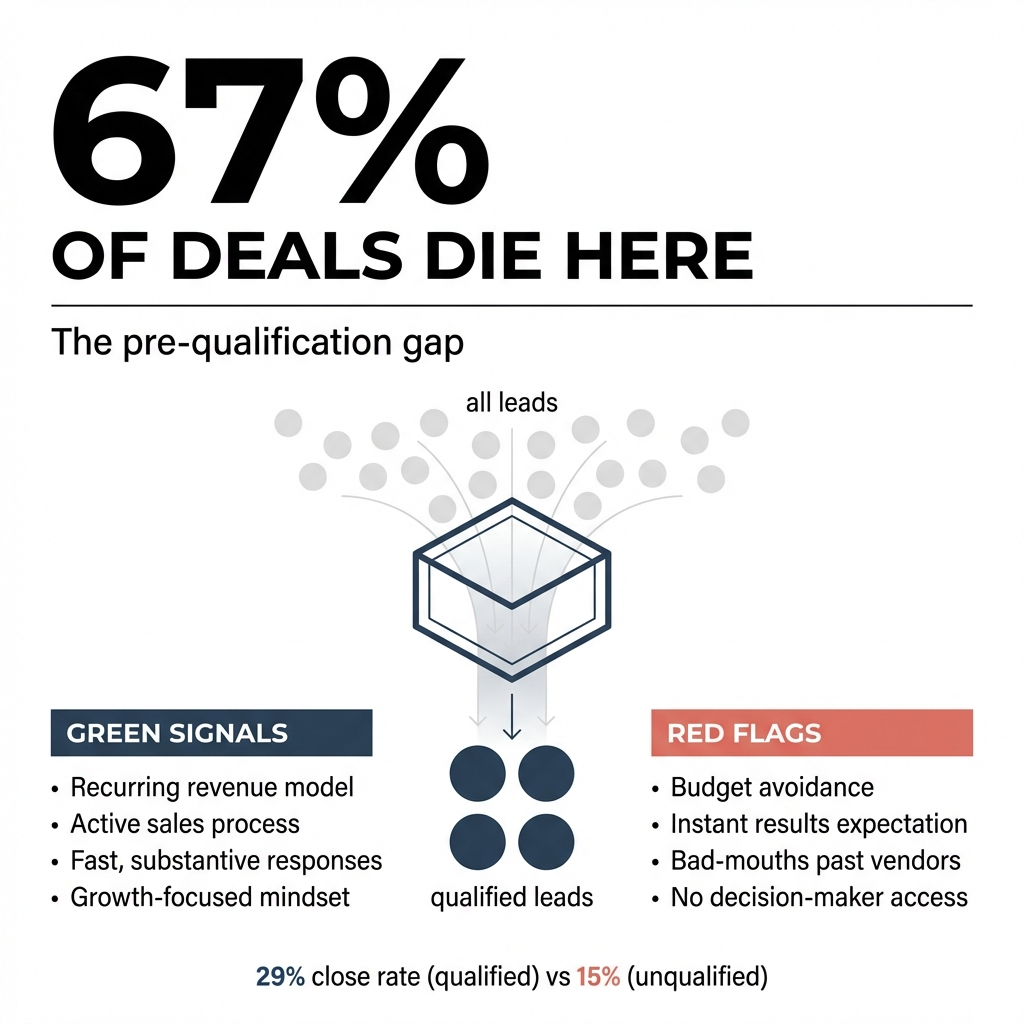
The result? Burned-out sales teams, frustrated clients, and conversion rates that make you question your entire strategy. The data backs this up: 67% of lost deals happen because leads weren't qualified properly.
That's not a sales problem. That's a pre-qualification problem.
I'm going to walk you through the exact pre-qualification process we use at HRS to help digital agencies and lead generation companies improve their close rates while actually working less. This isn't theory. This is the framework that helps our partners become revenue positive quickly.
Why Pre-Qualification Matters More Than You Think
Here's what most people miss: selectivity increases conversion.
When you focus on quality over quantity, your closing ratio can jump from 11% to 40%. I've seen it happen. Companies using proper lead scoring see 20% more conversions across the board.
But there's something even more important than conversion rates.
Client satisfaction.
When you work with the right clients from day one, retention skyrockets. A 5% increase in retention rates can boost profits by 25% to 95%. You're not just closing more deals. You're building a business that compounds.
The wrong clients drain resources, create service headaches, and ultimately churn. 91% of customers who had a bad experience will never do business with you again. Worse? 95% will tell others about it.
Pre-qualification protects you from that nightmare.
The Research Phase: What to Look for Before You Ever Pick Up the Phone
I start every prospect evaluation the same way: research.
Not surface-level LinkedIn scrolling. Real research that tells me whether this conversation is worth having.
Here's what matters: 76% of top-performing sales representatives always research their prospects before reaching out. Meanwhile, 82% of B2B decision-makers think sales reps are unprepared for calls.
That gap is your opportunity.
Company Fundamentals
Size and structure. Does their company size match your ideal customer profile? Companies with a clear ICP achieve 67% higher win rates. I look at employee count, revenue indicators, and organizational structure.
Industry fit. We focus on digital agencies and lead generation businesses because we understand their pain points. When you know the industry, you spot problems faster.
Technology stack. What tools do they currently use? This tells me about their sophistication level and potential integration challenges.
Decision-Making Signals
The average buying group in B2B is now 22 people. You need to understand who influences decisions before you start.
I map out:
Who holds budget authority
Who experiences the daily pain
Who evaluates technical requirements
Who can kill the deal
This research phase takes 15-20 minutes per prospect. It saves hours of wasted calls.
Behavioral Indicators
I look at their digital footprint. Are they actively discussing problems you solve? Do they engage with content about lead generation, automation, or client acquisition?
B2B buyers complete 57% to 70% of their research before contacting sales. If they're already researching, they're closer to buying.
The Good Fit Signals: Green Lights That Tell You to Move Forward
Not every signal carries equal weight. I've learned to prioritize certain indicators that predict success.
Business Model Alignment
They have recurring revenue. Companies with subscription or retainer models understand long-term value. They think in terms of client lifetime value, not just immediate ROI.
They're already selling to B2B. They understand longer sales cycles and relationship-based selling. The learning curve is shorter.
They want to grow revenue streams. Our mission at HRS is to provide a vehicle for partners to grow their revenue. If that aligns with their goals, we're speaking the same language.
Operational Readiness
They have a sales process. Even if it's imperfect, they understand process. You're improving something that exists, not building from scratch.
They value technology. They see tools as force multipliers, not expenses. This mindset predicts adoption and success.
They're coachable. During initial conversations, do they ask questions? Do they acknowledge gaps? Humility beats arrogance every time.
Communication Patterns
Response speed matters. Companies that engage within 60 seconds can boost conversion by almost 400%. But I'm looking at their response patterns too.
Do they:
Respond within reasonable timeframes?
Ask substantive questions?
Involve the right people in conversations?
Follow through on commitments?
These behaviors predict how they'll work with you long-term.
The Red Flags: Warning Signs That Save You Time and Headaches
I've learned to trust my gut on red flags. Ignoring them always costs more than walking away.
Budget and Authority Issues
They can't discuss budget. If they dodge pricing conversations or can't articulate budget parameters, they're not ready. You'll waste weeks in a process that goes nowhere.
You can't reach decision-makers. If you're three calls in and still talking to gatekeepers, the deal is stuck. Real prospects give you access to authority.
Misaligned Expectations
They want instant results. Direct messaging automation on LinkedIn, email, and voice delivers results, but it's not magic. If they expect overnight transformation, you're setting up for disappointment.
They're price shopping. If they lead with "What's your best price?" before understanding value, they see you as a commodity. These relationships rarely work.
They want you to do everything. We provide training and ongoing support, but partners need to engage. If they expect a completely hands-off solution, expectations are misaligned.
Operational Red Flags
High client churn. If they can't retain their own clients, adding more leads won't fix the underlying problem. You'll be blamed for their operational issues.
No process discipline. Chaos isn't charming. It's expensive. If they can't follow a basic sales process, they won't maximize your platform.
They bad-mouth previous vendors. Everyone has had bad vendor experiences. But if they trash every previous partner, you're next.
The Qualification Conversation: Questions That Reveal Truth
Research tells you what to ask. The qualification call reveals what they won't say online.
I use a framework that feels like conversation, not interrogation.
Opening Questions
"Walk me through your current lead generation process."
This open-ended question reveals their sophistication, pain points, and self-awareness. Listen for what they emphasize and what they avoid.
"What's working well right now?"
Positive framing gets honest answers. You learn what they value and what success looks like to them.
Pain Point Questions
"Where do leads fall through the cracks?"
"What keeps you from reaching out to more prospects?"
"How do you currently measure lead quality?"
These questions uncover whether your solution addresses real problems or perceived ones.
Decision Process Questions
"Who else needs to be involved in this decision?"
"What's your timeline for making a change?"
"What would make this a no-brainer for you?"
These questions map the path forward. Vague answers mean they're not ready.
Vision Questions
"Where do you want your business to be in 12 months?"
"How would more qualified leads change your business?"
Vision alignment matters. If they're thinking about growth the way you think about growth, you'll build something together.
Why Selectivity Increases Close Rates
Here's the paradox: when you qualify harder, you close more.
Qualified opportunity close rates average around 29%, while overall win rates across all pipeline stages sit at 15-25%. That gap represents wasted effort.
But there's something deeper happening.
Selectivity signals value.
When you're selective about who you work with, prospects perceive higher value. You're not desperate. You're choosing partners carefully. That positioning alone changes the dynamic.
You invest in the right conversations.
Personalized calls have a 202% higher conversion rate than generic outreach. When you've pre-qualified properly, every conversation is personalized because you understand their situation deeply.
You avoid the drain of bad-fit clients.
73% of people leave brands because of poor customer service. But here's what people miss: bad-fit clients create service problems. They demand things you're not built to deliver. They complain about things you never promised.
When you work with the right clients, service becomes easier. Satisfaction increases. Referrals flow naturally.
The Long-Term Impact: Building a Business That Compounds
Pre-qualification isn't just about this quarter's numbers.
Companies generate 65% of their revenue from repeat customers, who spend 67% more than first-time buyers. When you start with the right clients, you're building a foundation that compounds.
Every good-fit client becomes:
A case study that attracts similar clients
A reference that shortens sales cycles
A source of referrals in their network
A long-term revenue stream that stabilizes your business
At HRS, we've built our entire partner model around this principle. We provide approved partners with a free white label platform and full training because we're selective about who we partner with. We want partners who will grow with us, not just use us.
That selectivity protects both sides.
Making Pre-Qualification Part of Your Process
You don't need to overhaul everything tomorrow.
Start here:
Define your ideal customer profile. Get specific. Company size, industry, revenue model, technology adoption, growth trajectory. Companies that define their ICP see a 68% higher account win rate.
Create a research checklist. What do you need to know before the first call? Make it repeatable.
Develop your qualification questions. Write them down. Practice them until they feel natural.
Track your red flags. When deals go sideways, document what you missed. Your red flag list will get sharper over time.
Measure quality, not just quantity. Track conversion rates by source. Track client satisfaction by how well they matched your ICP. Let data guide your qualification criteria.
The Bottom Line
Pre-qualification feels like you're turning away business.
You're not.
You're protecting your time, your team, and your reputation. You're building a business with clients who value what you do, pay on time, refer others, and stick around.
The numbers prove it. The experience confirms it.
Start saying no to the wrong prospects. Your close rate will thank you.